Find out about the latest news in Madisonville, Louisiana as well as St. Tammany Parish. We will keep you “tuned in” to all of the information about Southeast Louisiana as well as the real estate industry in general. Many new home buyers are concerned about the market, mortgage information, and builder trends. We plan on keeping you as up to date as possible on these and many more topics. There is a lot going on in the Greater New Orleans area, so you will have plenty to read!

Why Wood Remains the Gold Standard in Home Design

For years, ceilings were playfully called the “fifth wall,” a design opportunity often overlooked. Today, designers are shifting their gaze downward, treating the floor as the “sixth wall” — a canvas for style, warmth, and personality. At the center of this design shift? Wood flooring.
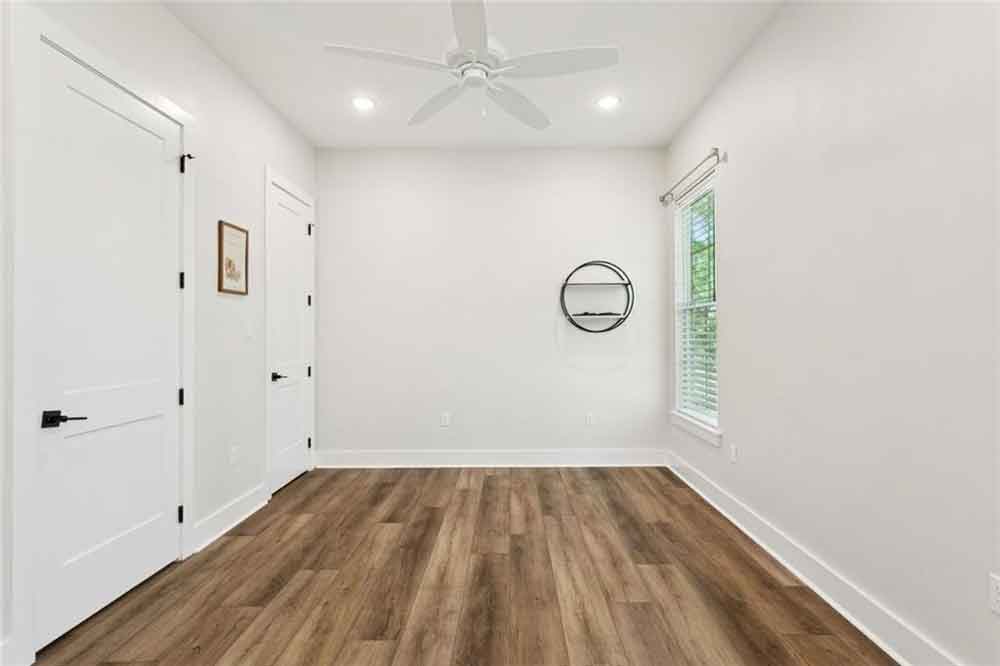
Homeowners are once again gravitating toward wood, not only for its timeless look but also for the vast range of choices it offers. From species and finishes to plank sizes and installation patterns, wood is as versatile as it is enduring. And while it may be a bigger investment, its value is hard to deny. According to the 2022 Remodeling Impact Report, homes with wood floors see a remarkable 147% return on investment.

“Wood is considered a luxury material rather than a commodity,” says Brett Miller of the National Wood Flooring Association. That reputation, along with its ability to elevate a space, keeps it high on homeowners’ wish lists.

What to Know Before Choosing Wood Floors
Solid vs. Engineered

Solid planks offer longevity and can be refinished repeatedly, while engineered boards bring extra stability, especially in areas with humidity shifts. Both are real wood; the choice often comes down to budget, location, and lifestyle.

Cost Considerations

Engineered wood can be significantly less expensive — but not always. Veneer thickness, species, and construction methods can push some engineered options into the same price range as solid hardwoods.

The Appeal of Wide and Long Boards

Designers are seeing rising demand for planks as wide as 7–10 inches and as long as 12–16 feet. These create an expansive, seamless look that feels modern and sophisticated. Historic remodels, however, often retain original narrower widths to maintain authenticity.

Trending Colors

Light oaks and natural tans dominate current preferences, while deeper stains like hickory provide striking contrast against pale walls. Painted or boldly stained floors — even in colors like dark blue — are gaining traction as homeowners seek unique touches. Reds, oranges, and certain grays, once in fashion, are losing ground.

Popular Species

Regional preferences matter: maple and walnut are favorites in the South for their hardness and subtle grain, while white and red oak remain staples in the Northeast. Availability and price often guide final decisions.

Finish Matters

Glossy finishes are out; satin sheens are in. Lower-sheen floors hide scratches and dust better while offering a softer, more natural look. Reclaimed boards continue to charm, especially in vintage settings, though they come at a premium. Patterns such as herringbone and chevron are also resurging in popularity.

Maintenance Made Simple

Despite lingering perceptions, wood floors are not high-maintenance. Mild soap and water, periodic refinishing, and quick attention to spills or pet accidents usually suffice. A full resanding is typically only needed every decade or so.

The Bottom Line

Whether you choose solid or engineered, dark or light, traditional or bold, wood flooring remains a benchmark of quality and style. As designer Patricia Gaylor notes: “There’s simply no substitute for natural, classic materials.”

For homeowners, that means the floor isn’t just a surface to walk on—it’s a statement piece that can define the entire home.

Click Here For the Source of the Information.

Blending Function, Personality, and Sustainability

The kitchen remains the heart of the home, and for today’s homeowners, style and practicality must go hand in hand. From bold cabinetry colors to smarter, greener appliances, the modern kitchen continues to evolve as a reflection of personal taste, comfort, and conscious living.

Countertops Beyond the Basics

Granite and quartz, once the go-to countertop choices, are losing ground. Concerns over quartz’s silica dust and granite’s dated feel have homeowners exploring fresh alternatives.

Design professionals now point to natural quartzite and sintered stones like Dekton and Neolith as standout options. These high-performance surfaces come in a variety of hues and finishes, resist staining and scratching, and in some cases, can even be backlit for dramatic effect. For those willing to invest, marble endures as a timeless choice, with many designers arguing that the marks it gathers over time only enhance its character. Extending countertop material into the backsplash—a trend dubbed the “countersplash”—is also gaining momentum for a seamless, elevated look.

Smarter Storage Solutions

As open-concept kitchens remain popular, storage has become more strategic. Stacked cabinetry above refrigerators, hidden pantries tucked into the back of kitchens, and creative drawer systems are helping homeowners maximize space without sacrificing flow.

When it comes to finishes, darker palettes are on the rise. Rich walnuts, deep oaks, and even black cabinetry are proving especially popular in spaces with generous natural light. The shift away from stark all-white kitchens shows homeowners are ready for warmth and moodier tones.

Personalization Takes Center Stage

Designers agree that homeowners want kitchens that express individuality. Custom hardware, mixed metal finishes, layered lighting, and unique cabinetry colors all play a role. While white cabinets remain a classic favorite, wood stains, shades of blue, and even dark greens are surging. Designer Ginger Curtis calls the return of 1930s-inspired green cabinetry a “classy, confident comeback.”

Lighting is another opportunity for expression. Sculptural pendants, bold sconces, and even custom-designed fixtures are transforming functional spaces into personal statements.

Comfort Meets Utility

While aesthetics matter, homeowners still demand comfort and livability. Large islands now double as dining tables, often stretching over seven feet and seating entire families. Softer visual elements—like hand-scraped flooring—help balance the abundance of hard surfaces. The open-concept kitchen continues to thrive, blending seamlessly into living areas to create welcoming, multifunctional spaces.

A Sustainable Shift

Environmental awareness is reshaping material and appliance choices. Reclaimed wood, bamboo, stone, and locally sourced materials are popular for minimizing environmental impact. Meanwhile, smart appliances like water-saving taps, Wi-Fi-enabled ovens, and energy-efficient refrigerators are appealing to eco-conscious buyers.

Designing for Longevity

The “aging in place” movement is also influencing kitchen design. Features such as pull-out shelving, wide drawer handles, nonslip flooring, and rounded countertop edges are being incorporated to ensure kitchens remain safe and usable for homeowners of all ages. Wheelchair-accessible cabinet heights and front-mounted appliance controls add further accessibility.

Small Updates, Big Impact

Not every project requires a full remodel. Some impactful upgrades include:

Appliance suites: Replacing all appliances at once for a cohesive look, with many homeowners opting for smart, connected models.

Rounded corners: Adding subtle curves to islands and counters softens the kitchen’s lines and introduces a contemporary feel.

Extended backsplashes: Carrying tile or stone up to the ceiling or beneath a range hood adds drama and texture.

Supersized islands: Eliminating the need for a separate dining table in some households.

The Takeaway

Today’s kitchens are more than just places to cook—they are versatile hubs that showcase design, innovation, and personality. Whether it’s through a statement countertop, dramatic cabinetry, or sustainable choices, homeowners are embracing a new era of kitchen design where practicality meets individuality.

Click Here For the Source of the Information.

Millions Could Benefit if Mortgage Rates Dip Below 6.5%

Even a modest dip in mortgage rates could unlock relief for millions of homeowners, according to new research.

The August Mortgage Monitor from Intercontinental Exchange (ICE) projects the average 30-year fixed mortgage rate could slip to 6.3% by January 2026—the most optimistic six-month outlook since April. With rates currently hovering near 6.6%, that drop could open refinancing opportunities for about 3 million homeowners, nearly double the current number eligible. If rates fall further to 6.125%, as many as 4 million households could stand to benefit.

Refinancing potential is more than theoretical: ICE data shows borrowers who refinanced in the second quarter shaved 0.85 percentage points off their rates on average, translating to roughly $240 in monthly savings.

Younger Homeowners Are Counting on It

For many younger buyers, refinancing isn’t just appealing—it’s essential.

A 2025 survey from employment verification provider TrueWork revealed that more than half of all homeowners view refinancing within the next three years as “important” or “extremely important.” Among Gen Z and millennial homeowners, the share is significantly higher compared to baby boomers.

“Younger buyers are betting their financial future on the hope that interest rates will drop significantly enough to make refinancing viable,” said Ethan Winchell, president of TrueWork.

Market Pressure and Fed Expectations

High mortgage rates, layered on top of already elevated home prices, have pushed affordability out of reach for many Americans. But with growing speculation that the Federal Reserve could cut rates in September, optimism is building that lower borrowing costs may arrive sooner rather than later.

If those cuts materialize, even incremental declines in mortgage rates could trigger a meaningful wave of refinancing—offering relief to existing homeowners while reshaping the broader housing landscape.

Click Here For the Source of the Information.

What Buyers and Sellers Should Expect When It Comes to Housing Affordability

With mortgage rates still hovering near multi-decade highs and inflation showing signs of creeping upward again, housing affordability is once more at the forefront of consumer concerns. If these conditions persist, buyer demand could weaken further and home prices might finally start to soften. On the other hand, if the economy steadies and borrowing costs ease, demand could rebound quickly—pushing prices higher again. The question on everyone’s mind this fall is which direction the market will take.

Experts agree that mortgage rates remain the single biggest factor shaping affordability in the near term. Mark Worthington, a branch manager with Churchill Mortgage, explained that a sharp decline in rates could temporarily improve affordability but might also reignite demand and send prices back up. Projections suggest only minor relief: the Mortgage Bankers Association expects the average 30-year fixed mortgage rate to land near 6.7% by the end of the year, while Fannie Mae anticipates a modest dip to 6.4%. Debra Shultz, vice president of lending at CrossCountry Mortgage, noted that the Federal Reserve is unlikely to cut rates until October 2025, meaning stability rather than volatility is the most likely scenario this fall.

That stability could be a welcome development. Real estate advisor Dana Bull of Compass emphasized that steady rates allow both buyers and sellers to make decisions without fear of sudden swings. For many, predictability matters just as much as affordability.

Inventory is another piece of the puzzle. Nationally, for-sale listings have risen nearly 25% year over year, reaching the highest level since before the pandemic. More homes on the market generally lead to greater competition among sellers and potentially better deals for buyers. Yet conditions remain highly localized. In Seattle, bidding wars have already returned, while markets like Dallas still offer buyers plenty of options in the lower price ranges. Mortgage rates will influence this dynamic as well—if they fall, more homeowners with ultra-low existing rates may finally list their properties, freeing up additional supply.

As for prices, most experts expect them to hold steady or decline slightly. The median home price now sits just under $411,000, with forecasts pointing to growth of only 2 to 3% for the year, and possible drops in select regions. Shultz described current prices as “slowing but still high,” while Denver agent Brandi Wolff suggested that a significant dip in rates—below 6%—would likely spark renewed competition and drive prices higher again. If rates remain steady, however, modest price declines could continue into the fall.

For move-up buyers who are both selling and purchasing, the challenges are twofold. Increased inventory and elevated mortgage rates make it harder to attract top dollar for an existing home, even as they provide more favorable buying conditions on the other side of the transaction. Realtor.com data shows that homes are now spending an average of 58 days on the market, a week longer than last year, reflecting slower demand. Sellers who overprice risk being forced into steep reductions later. Wolff stressed the importance of setting realistic expectations from the start to maximize profits and avoid costly corrections.

Buyers looking to navigate the market more affordably this fall have several options. Negotiating concessions from sellers or arranging mortgage rate buydowns with lenders can ease monthly costs. Exploring fixer-uppers or properties that have lingered on the market for over a month may also open the door to discounts. Bull observed that sellers often become more flexible after 30 days without an offer, making it a strategic time for buyers to step in with a compelling proposal.

While forecasts remain uncertain, the consistent advice is to watch mortgage rates closely and stay informed about local trends. For those willing to be flexible and creative, there are still opportunities to find value—even in a market where affordability continues to be stretched thin.

Click Here For the Source of the Information.

Adjustable-Rate Mortgages Make a Comeback

With fixed mortgage rates stuck around the 7 percent mark and home prices hitting new highs, many buyers are turning to adjustable-rate mortgages (ARMs) as a way to make ownership more affordable. These loans, which offer lower initial interest rates than traditional fixed-rate mortgages, are gaining traction among borrowers who want to ease the upfront cost of buying a home.

Why ARMs Are Back in Demand

ARMs start with a fixed interest rate for an introductory period — often three, five, seven, or ten years — before adjusting periodically based on market conditions. That initial lower rate translates into smaller monthly payments, giving buyers more purchasing power.

“Potential homebuyers are finding ways to reduce their monthly payments and view ARMs as more attractive given the widening spread between rates for ARM and fixed-rate loans,” explains Joel Kan, deputy chief economist at the Mortgage Bankers Association (MBA).

At the beginning of 2025, ARMs accounted for just 4.7 percent of all mortgage applications. By midyear, that share had jumped to nearly 8 percent.

The Gamble with ARMs

Taking on an ARM is essentially making a bet about the future of mortgage rates. If rates are lower when your fixed period ends, your payments could fall. If they’re higher, your monthly bill could increase significantly.

That uncertainty makes ARMs riskier than fixed-rate mortgages. “Mortgage rates are the magic bullet, and we’re waiting and waiting until those come down,” said Lawrence Yun, chief economist at the National Association of Realtors. Predicting when — or if — that happens is nearly impossible.

Who Benefits Most from ARMs?

An adjustable-rate mortgage can be a smart choice in certain situations:

Short-term homeowners: If you expect to sell within five to ten years, an ARM lets you enjoy lower payments during your time in the house.

Risk-tolerant borrowers: Some buyers are comfortable trading stability for the chance to save money upfront.

Jumbo loan borrowers: ARMs can make high-priced homes more manageable by reducing early payments.

Extra principal payers: If you can make additional payments during the introductory period, you’ll reduce your balance faster and minimize exposure to future rate hikes.

The Risks to Watch

Despite their appeal, ARMs aren’t for everyone. They typically require at least a 5 percent down payment, compared to 3 percent for some fixed-rate loans. More importantly, lenders now underwrite ARMs based on the highest possible payment you could face, to make sure you can handle future increases.

That’s because life doesn’t always go according to plan. A job loss, a stalled home sale, or an economic downturn could leave you stuck with higher payments than you expected. For borrowers who value certainty, fixed-rate mortgages remain the safer bet.

Types of ARMs

If you’re considering an adjustable-rate loan, here are the most common options:

  • 3/1 or 3/6 ARM – Fixed rate for three years, then adjusts annually or semi-annually. Usually comes with the lowest initial rate.
  • 5/1 or 5/6 ARM – Fixed rate for five years, then resets annually or semi-annually. The most common ARM structure.
  • 7/1 or 7/6 ARM – Seven years of stability before regular adjustments. Balances lower risk with a still-competitive initial rate.
  • 10/1 or 10/6 ARM – A full decade of predictable payments before adjustments begin. Introductory rate is slightly higher but still lower than most fixed-rate mortgages.

All ARMs come with rate caps, which limit how much your interest rate (and payment) can increase annually and over the life of the loan.

Adjustable-rate mortgages can be a useful tool in today’s housing market, especially for buyers who don’t plan to stay in their homes long-term or who want lower payments in the near future. But they come with real risks, and success depends on financial flexibility — and a tolerance for uncertainty.

If you can’t stomach the possibility of higher payments down the line, a fixed-rate loan may still be the better path. But for the right borrower, an ARM can open the door to a home that might otherwise be out of reach.

Click Here For the Source of Information.

Mortgage Rates Sink After Weak Jobs Report, Offering Buyers a Window of Opportunity

Mortgage rates have dropped sharply, hitting their lowest level in 10 months, after a disappointing July jobs report rattled financial markets. The average 30-year fixed mortgage rate fell to 6.57% on Monday, down from 6.74% just days earlier, according to Mortgage News Daily. The decline marks nearly a 20-basis-point drop since Friday and gives both homebuyers and homeowners a rare opening in an otherwise challenging housing market.

The sudden shift has sparked questions for many: Is now the right time to buy or refinance, or should they wait to see if rates drop even further? The answer is not simple, especially at a time when the U.S. economy shows signs of slowing and job seekers are struggling more to find work. A recent Bright MLS survey found that many prospective buyers have postponed entering the market due to uncertainty about the broader economy.

Still, lower rates are creating meaningful opportunities. Alex Elezaj, chief strategy officer at United Wholesale Mortgage, noted that falling rates give buyers more purchasing power and allow homeowners to potentially refinance into shorter-term loans. For example, moving from a 30-year to a 15-year mortgage not only accelerates payoff but also cuts down the total interest owed. Homeowners currently paying higher rates may benefit the most. A borrower with a $300,000 loan at 7.5% pays roughly $2,100 per month; refinancing to 6.57% would drop that payment by nearly $200, not including fees and closing costs.

The sharp decline in rates was fueled by investors shifting into U.S. Treasury bonds, which are considered safe during economic uncertainty. This demand pushed yields on the 10-year Treasury note lower, dragging mortgage rates down with them since the two tend to move in tandem. Daryl Fairweather, chief economist at Redfin, said the drop could encourage hesitant buyers to make a move before the end of summer, adding that a household with a $3,000 monthly budget has gained about $20,000 in purchasing power since mortgage rates peaked in May at just over 7%.

Even with this newfound flexibility, affordability challenges remain steep. The median U.S. home price reached an all-time high of $435,300 in June, according to the National Association of Realtors. While the recent dip in mortgage rates softens monthly payments, home prices remain elevated, limiting how far that extra buying power can stretch.

Looking ahead, investors are increasingly betting that the Federal Reserve will cut its benchmark rate at its September meeting. While mortgage rates are not directly tied to the Fed’s decisions, they often reflect broader expectations for inflation and economic growth, moving in step with Treasury yields. Whether rates continue to fall will depend largely on incoming economic data. Chen Zhao, an economist at Redfin, noted that markets had already expected signs of weakness in the jobs report, suggesting further declines may be capped unless additional data confirms deeper economic softness.

For now, the drop in mortgage rates provides a moment of relief in a housing market that has been defined by high costs and limited affordability. Buyers and homeowners willing to act quickly could see meaningful savings, though the future path of rates remains uncertain as the Fed and financial markets await more economic signals in the weeks ahead.

Click Here For the Source of the Information.