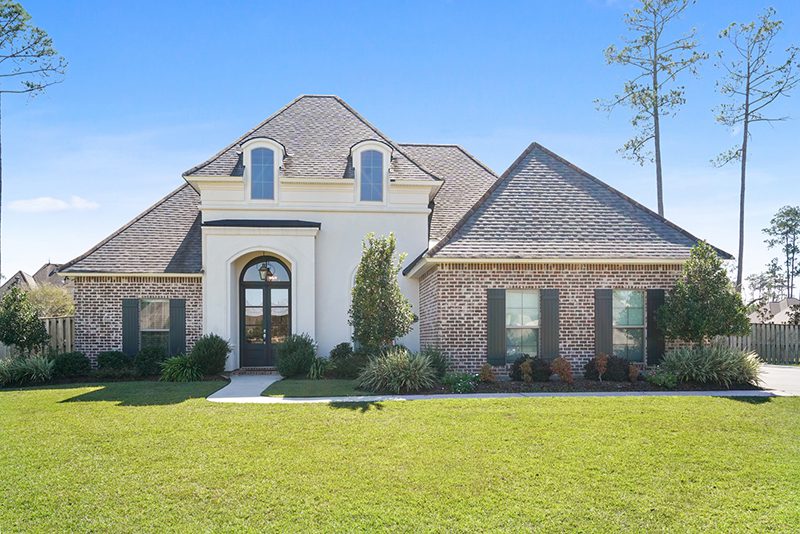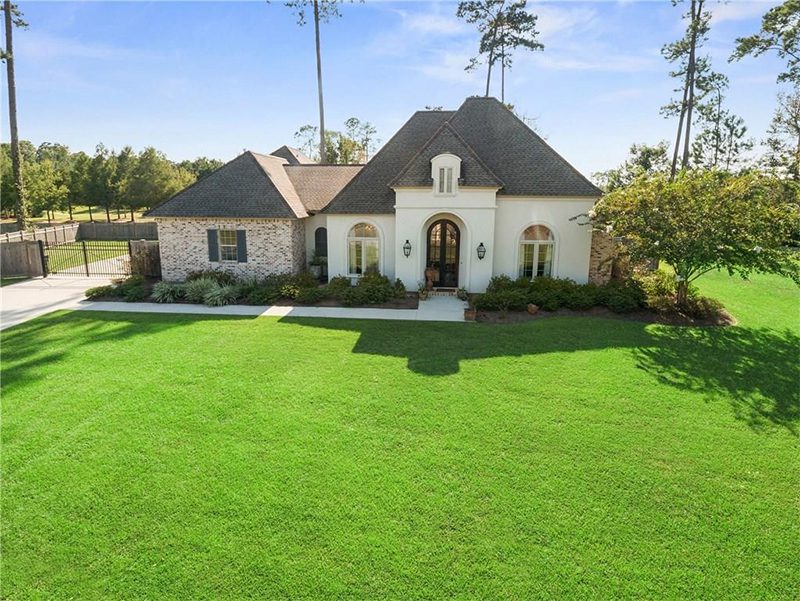
Find out about the latest news in Madisonville, Louisiana as well as St. Tammany Parish. We will keep you “tuned in” to all of the information about Southeast Louisiana as well as the real estate industry in general. Many new home buyers are concerned about the market, mortgage information, and builder trends. We plan on keeping you as up to date as possible on these and many more topics. There is a lot going on in the Greater New Orleans area, so you will have plenty to read!

Scholarships Available Through the National Home Builders Association
Just yesterday Northshore Homebuilders Association Director Amy Ybarzabal and Chancellor William Wainwright signed a partnership agreement for a scholarship given to Northshore Technical Community College from the Northshore Builders Association.

“The Northshore Homebuilders Association is pleased to partner with NTCC to increase the number of highly-skilled workers in the tri-parish area,” said association Director Amy Ybarzabal. “In addition to the establishment of the scholarship endowment, this partnership opens the door to other collaborative projects, including shared resources for continuing education for our members.”

The new endowed scholarship will be given to students who are enrolled in a Construction Pathways program. The scholarship will cover the Tangipahoa, St. Tammany and Washington parish campuses. Chancellor William Wainwright explains that the colleges will have workforce development and certification in electrical, welding, drafting, building technology, and HVAC. Those who plan to transfer to a university to obtain a bachelor’s degree can also complete an associate’s degree in construction pathways at one of the campuses then transfer to a university.

Northshore Technical Community College is a member of the Louisiana Community and Technical College System. The college offers associate degrees, technical diplomas, and certificates to students seeking a competitive edge in today’s global economy. There are campuses throughout the Northshore in each of the five parishes.

Click Here For the Source of the Information.
How Green Mortgages Are A Good Way To Go

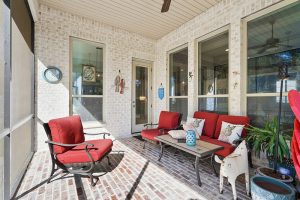
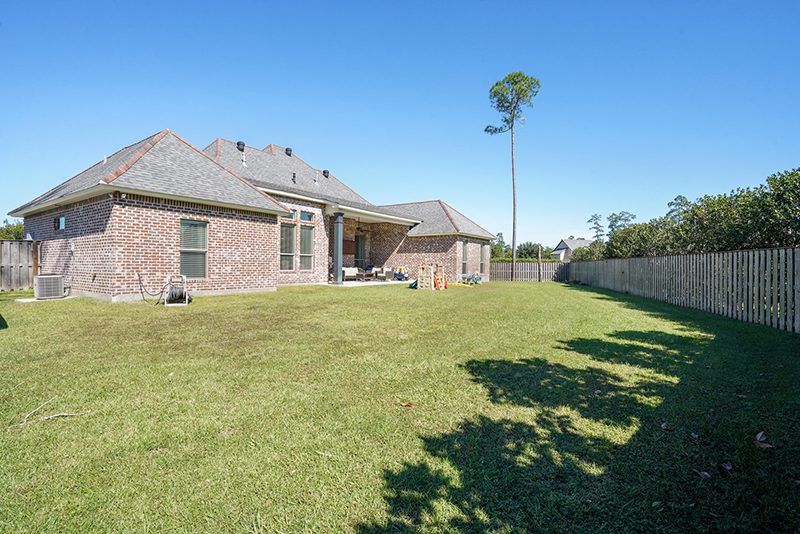
Covered patio that looks out onto the spacious fenced-in backyard. This patio is complete with a ceiling fan and custom lighting.More and more time is spent in our homes as we are fighting COVID-19. There has been a big boost in telecommuting which has shifted the importance of home offices and exercise rooms. As homeowners spend more time at home, utilities are being used more than in the past.

According to Freddie Mac, March 2020 saw a 22% spike in electrical usage over March 2019. Midday consumption which is between 10 am – 3 pm rose 35%. This increase cost homeowners around $25 more for their monthly utility bills in April.

Homeowners are now placing importance on energy efficiency benefits. They are focusing on ways to reduce energy consumption which will reduce their monthly utility bills. Great ways to do this are by upgrading to energy-efficient appliances, heating, ventilation, or air conditioning (HVAC) units, windows and doors, as well as the addition of air sealing, insulation, solar panels, or geothermal heating.

A great way for homeowners to accomplish this is through green mortgages (also known as energy mortgages). These types of mortgages can be described as an environmentally friendly type of home loan. They are a special type of loan that is specifically created to save homeowners money while making a home more energy-efficient. These loans let you borrow money specifically to pay for energy-efficient upgrades to your home.

Builders and remodelers stay up to date with energy-efficient features through the National Association of Home Builders’ High-Performance Counts. Along with the NAHB, the National Association of Realtors created Home Performance Counts so that builders and remodelers can determine what energy-efficient features are most beneficial for their clients.

Remember using a green mortgage on your home will not only decrease monthly utility costs but will also increase your home’s market value. Stay up-to-date with tips on water efficiency, energy efficiency, indoor air quality, and other building science strategies through the National Association of Home Builders’ Sustainability and Green Building team.

Click Here For the Source of the Information.

Record High Pending Home Sales For August

The housing market is hot right now, and pending home sales are at a record high. The record-low mortgage rates are helping with the demand. In fact, August marks the fourth straight month for pending home sales increases.

The National Association of Realtors (NAR) puts out the Pending Home Sales Index (PHSI) which predicts pending home sales based on the number of current signed contracts. The PHSI increased by 8.8% from 122.1 to 132.8 from July to August. This is the highest level on record. As far as a year-over-year basis, pending home sales were 24.2% higher than they were this time last year.

Pending home sales have risen across the country in all four regions when it comes to month-over-month activity. It ranged from 4.3% in the Northeast to 13.1% in the West. The year-over-year activity saw the biggest gain of 26.0% in the Northeast. This is the second straight month that the Pending Home Sales Index reported double-digit year-over-year increases in every region.

Now is the time to purchase a new or existing home. If you are ready to take that step, contact a Realtor in your area who can get you the best price for the best home in the community you desire.

Click Here For the Source of the Information.

Will Low Home Inventory Dampen The U.S. Housing Boom?

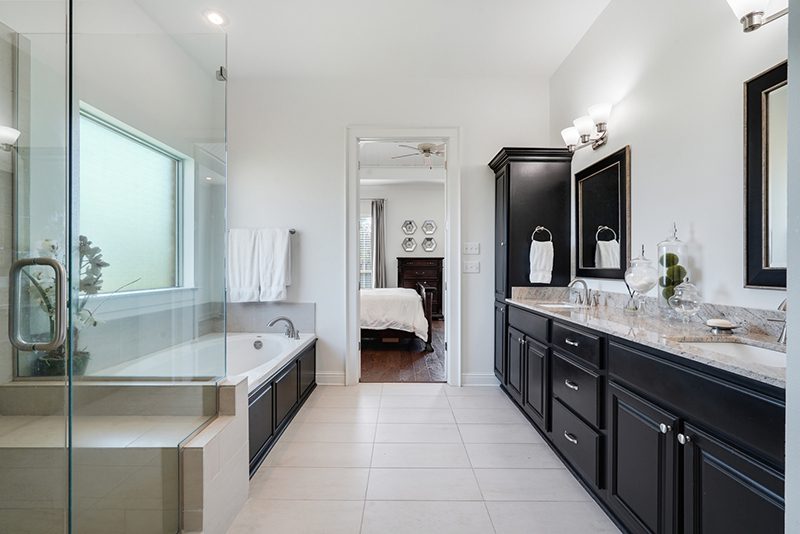
Green leaf secondary bathroom featuring a nice oversized vanity.The housing market is booming with buyers excited to purchase a home. The low mortgage rates are fueling buyer’s interest in the market for a home. The only downfall is the low home inventory.
There are several factors that are occurring that have hindered the production of new home inventory. There are low mortgage rates but the ongoing shortage and higher prices of homes are not helping the housing market.

Today’s focus has shifted for home builders. A decade ago builders were focusing more on higher-end homes. Builders did not build as many homes because they could earn just as much on one expensive high-end home than several less expensive homes combined. The huge millennial generation is now in the market for a home and the focus has shifted to less expensive properties.

Existing homes are also on the decline. The supply has been shrinking for years and is now lower than ever.  At August’s sales pace, it would take a little more than three months to run out of new homes for sale, the lowest level on record, according to government data dating back to 1963.

According to the National Association of Home Builders, new home construction will be about the same this year coming in at just under 900,000. Predictions for 2021 say home starts will rise but only slightly because of the cost and availability of materials.

Lumber prices have spiked causing an added expense of $16,000 to the cost of a typical house according to the National Association of Home Builders. With the stay-at-home orders from COVID-19 sawmills were closed in the U.S. and Canada causing major timber shortages. Joshua Zaret, an analyst at Bloomberg Intelligence also says wildfires and the beetle infestation have also caused a delay in lumber production.

Rising home prices are also a burden to the market. Builders keep raising the prices of the homes because of the rising costs of materials. It is reported that in some areas of the country, builders are raising home prices as much as 2% a month.

“If that went on for two or three years, we’d be very concerned about affordability,” John Burns, an Irvine-based real estate consultant said. “Every time prices go up, it’s great for homeowners and bad for the renter who aspires to be a homeowner.”

Expensive materials and an increase in demand do not go well together.  The looming issue is that the demand for housing is outstripping supply at a time when construction has gotten more expensive.

Many home builders such as Lennar Corp. are only selling current inventory and what is currently under construction. Pre-sales are on hold so that the builder can try and avoid today’s high material prices.

“Sales could have been stronger with a singular focus on volume,” Stuart Miller, the company’s chairman, said on a Sept. 15 earnings call. “It is challenging at best to materially ramp production in this labor-constrained market, and it’s even more challenging to replace entitled land.”

The low inventory will only keep occurring with such high material prices. Builders want to keep building and producing inventory, however with the high cost and long waiting time on lumber that is just not possible at this time.

Click Here For the Source of the Information.

Faster Home Sales Due To High Demand

There is no seasonal slowdown on the horizon for the housing market. The pandemic might have put the brakes on for a short time but the record-low mortgage rates and lift of the stay-at-home orders have home sales going at a fast pace.
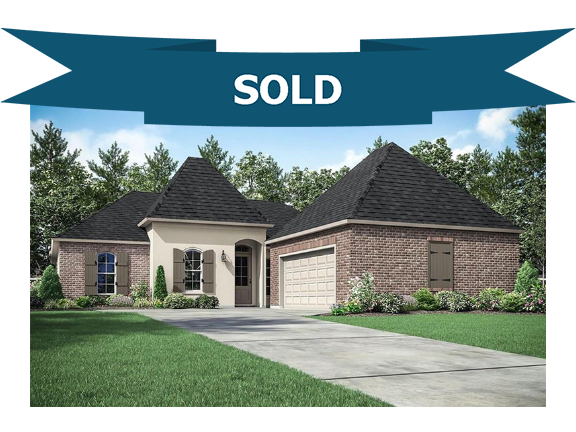
September saw homes sold 12 days faster than they did in September 2019. Realtor.com also reported that homes sold 39% faster this year during September than the average 25% faster usually seen this time of year. According to Realtor.com, it took just 54 days to sell a home during the month making this the shortest time since they began tracking this metric.

All four regions of the U.S. saw an uptick in home sales. In the Northeast homes spent 13 days less on the market than this time last year, in the South homes sold 11 days faster, in the Midwest they sold 9 days faster and in the West, it took 7 days less to sell a home.

“Many buyers tend to put their home search on hold after the start of the school year, but remote learning and the desire for more space continued to fuel buyer interest in September,” said Danielle Hale, chief economist at realtor.com. “Unseasonably high buyer interest coupled with historically low inventory and favorable mortgage rates are creating a perfect storm in the housing market. While this is good news for anyone looking to sell their home, it has created tremendous competition among buyers.”

The demand is making the prices for homes appreciate. The median price of a home that was sold in September was $350,000 which was up over 11% annually. Bidding wars are becoming the norm nowadays. The market is seeing a typical buyer pay around $20,000 more for a home than this time last year. Typically buyers face approximately 9% more competition but this year they are facing 25% more competition.

Low inventory in the housing market is only adding fuel to the fire when it comes to demand. It was reported that supply is down 39% annually and the number of listings is down 21%. Across the 50 metros, there has been no increase in inventory. Many markets are only seeing half the supply of homes for sale than what was on the market a year ago.

Click Here For the Source of the Information.

How to Use Total Hydrology Planning

Water conservation has always been a big issue when it comes to the use of water in our homes. Water conservation saves on costs, allows less land use for stormwater management and helps with the quality of water that is available. One way builders are seeking to help even further with water conservation is through total hydrology planning.

Total hydrology planning is a methodology developed by landscape architecture firm Consilium Design to identify and utilize all water resources on a project site. Every site or piece of land is different in how it reacts to the climate. Total hydrology planning looks at this relationship and determines the best way to balance between water supply and demand.

In order for the process to be successful, it must be implemented during the land planning and design phase. When a new community is developed, reducing the development footprint will in turn reduce the linear foot runs of water, sanitary sewer and the developed flows, enabling designers to scale down stormwater management systems and the amount of irrigated landscape. The patterns and connectivity of streets should be altered to allow better balance water pressure and reduce line sizes and construction phasing. Clustering homes around shared common “front yard” for neighbors to gather and play also will help reduce water needs.

Instead of clearing all the land, developers would benefit from keeping some of the native landscape. The compact design of homes that take up less space is a good way to preserve native landscaping. Native landscaping is much easier to re-establish in areas where dirt has been moved to build a home.

Another great feature that can be added to an existing home or to a new neighborhood is rainwater harvesting. If done correctly, 30% or more portable water demand can be reduced. For a home, rooftop collection and storage work best. For a new community, directing surface rainwater as sheet flows or via curb cuts from streets, parking lots, patios and walks to adjacent landscape areas whenever possible.

Just by changing the way we conserve water helps to create solutions for builders when it comes to water management. Builders should shift from focusing on the water that is not there to the way they can maximize what is currently available. This will make the total hydrology planning a success.

Click Here For the Source of the Information.