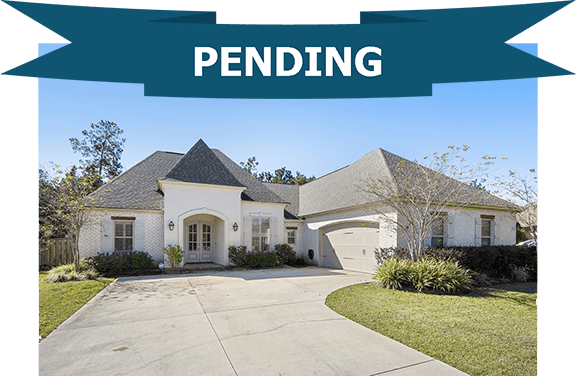
Find out about the latest news in Madisonville, Louisiana as well as St. Tammany Parish. We will keep you “tuned in” to all of the information about Southeast Louisiana as well as the real estate industry in general. Many new home buyers are concerned about the market, mortgage information, and builder trends. We plan on keeping you as up to date as possible on these and many more topics. There is a lot going on in the Greater New Orleans area, so you will have plenty to read!

Medline Land Clearing Granted Permit From St. Tammany

Three months ago the St. Tammany Parish government administration denied a land-clearing permit for the Medline distribution center located close to Covington. All State Financial Co., the landowner, got an early Christmas gift from the parish. The St. Tammany Parish government reversed its decision to deny the permit.

The company and parish agree that during the land-clearing they will preserve more live oaks and enlarge a detention pond, according to the records. “We’re happy to put in behind us and to be moving forward,” Bruce Wainer, whose family owns All State Financial, said Friday.

Mike Cooper, Parish President, encourages economic development in St. Tammany. He believes there are safe ways to develop the land. The property owners agreed to ensure protective safeguards. The completed project should not have an adverse drainage or flooding impact on surrounding properties when the development is complete.

The approved permit will allow the company to clear 47-acres of the total 70-acre property. The site is located between Ochsner Boulevard and Interstate 12. All State Financial also agreed to add a regional detention pond on the site which will allow additional stormwater storage. Fifty percent of the live oak trees will now be saved on the property as well as planting new live oaks which will equal 25% of the oaks that are removed. The company will also pay into a mitigation fund for the other 25%.

Once the 800,000-square-foot center is complete, the project will total $54 million. The project will be a great asset to the St. Tammany job market and local economy.

Click Here For the Source of the Information.
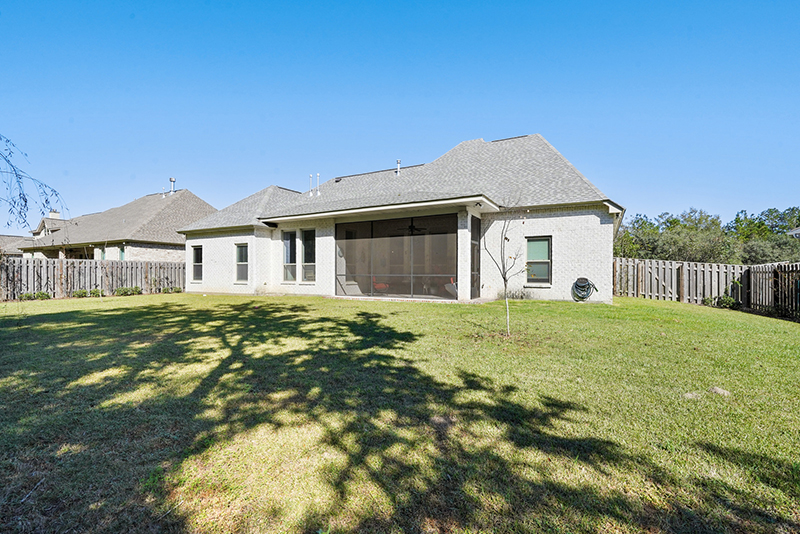
Homeowners Are Benefiting From the COVID-19-Driven Housing Boom

This year has brought many ups and downs, especially with the pandemic. COVID-19 has caused the housing market to boom. In fact, homeowners across the country are said to be collectively $1 trillion richer because of the pandemic-driven housing market.

According to CoreLogic, a company that provides information intelligence to identify and manage growth opportunities, improve business performance and manage risk, homeowners with mortgages have seen a 10.8% increase in their equity this past year. This adds up to a collective $1 trillion in gained equity. This means on average each American homeowner has gained $17,000, the biggest equity gain the country has seen in over six years.

The historically low foreclosure rates have helped with the equity gains because of the mortgage forbearance programs. These programs were put in place because of the pandemic to help borrowers who are struggling to keep their homes.

Supply and demand have also played a big role. The demand for housing is very strong. Historically low mortgage rates and the work/school-from-home culture have helped boost this demand. The mortgage rates have set 14 record lows in 2020.

Homeowners across the country saw different gains in each state. The states with the largest increase in home prices of course saw the biggest gains. The greatest amount was seen in Washington state with an average of $35,800, next was California with a $33,800 gain and in Massachusetts, homeowners saw an average of $31,200 gain in equity. On the flip side, North Dakota saw the lowest gain of only $5,400 because of the hard-hit they endured by the pandemic.

“Over the past year, strong home price growth has created a record level of home equity for homeowners,” said Frank Nothaft, chief economist at CoreLogic. “The average family with a home mortgage loan had $194,000 in home equity in the third quarter. This provides an important buffer to protect families if they experience financial difficulties.”

Click Here For the Source of the Information.

St. Tammany Parish Library Gives Thanks To Their Friends and Foundation Groups

The library system depends a great deal on groups of volunteers who give their time and money to help keep the library services up and running for the community. During the holidays the library system wants to give thanks to all those who help keep the library system running.
The St. Tammany Parish Public Library system opened its doors in 1950. The books that the library used were borrowed from the Lousiana State Library. The first library building was located on Boston Street and is now a hair salon. The library system now has grown into several branches which include Abita Springs Branch, Bush Branch, Causeway Branch, Covington Branch, Folsom Branch, Lacombe Branch, Lee Road Branch, Madisonville Branch, Mandeville Branch, Pearl River Branch, Slidell Branch and South Slidell Branch.

One group that is a big part of the system is the Friends of the Slidell Library which started in 1976. The foundation helps the Lacombe, Pearl River, Slidell and South Slidell branches. Funds that the foundation earns are mainly through book sales and silent auctions. They also accept donations at the Slidell Branch.

After Katrina, the St. Tammany Library Foundation was founded in 2006. The foundation has funded projects such as the children’s area and art found in the Covington Branch. All proceeds come for annual fundraisings such as the Distinguished Speaker Series and the Art Auction.

The West St. Tammany Friends of the Library supports the library branches on the west side of the parish and has been doing it for more than 30 years. They just reopened their book sales at the new location on N. Florida.

The Slidell Branch will hold a one-day sale on December 5, 2020, at the library from 9 am – pm. Books will range from $50 to $1.

Click Here For the Source of the Information.

Rise In Residential Construction Employment

It is no wonder the residential construction industry is busier than ever. The current housing market is better than ever with record-low interest rates. October 2020 saw 11,500 more residential construction employment than October 2019.


The Bureau of Labor Statistics reported in October 2020 that there was 2.9 million residential construction employment. This was a 23,800 rise in employment from September. The total construction industry which includes residential and nonresidential totaled 7.3 million employment.

According to the Employment Situation Summary, the total nonfarm payroll employment rose by 638,000 in October which marked the sixth consecutive month of increases. In the past six months, approximately 12.1 million jobs have been created.

Overall the unemployment rate dropped 1% to 6.9% in October making the number of unemployed drop to 11.1 million. The leading industry during the month of October was leisure and hospitality with 271,000 while the government sector lost 268,000 employees.

As of October, residential construction employment stands at 2.9 million. This includes 835,000 builders and 2.1 million residential specialty trade contractors. Job gains for residential construction are 70,783 a month on a 6-month moving average.

The unemployment rate dropped to 8.2% on a seasonally adjusted basis for construction workers. The pandemic has not faltered the residential construction industry. Unemployment is the industry has been trending down for the past six months.

Click Here For the Source of the Information.

Record Mortgage Rates Lows for the 12th Time This Year

The first of November saw mortgage rates fall again for the 12th time since the beginning of 2020. Currently, the record lows show an average interest rate of 2.78% on the 30-year fixed-rate and 2.32% on the 15-year fixed-rate mortgage. According to Freddie Mac, this is the lowest mortgage rate they have seen in close to 50 years.
Economists predict that rates have a good chance of getting even lower. In the next six to nine months we might see the 30-year mortgage drop as low as 2.3%. This will be inevitable if the Federal Reserve keeps supporting the economy and the Treasury prices remain low.

The bidding wars continue and will remain with the low rates. It is a seller’s market and there are tons of buyers who want to purchase a home. Homebuyers are refinancing and potential homebuyers are locking in the low rates.

“With a rising second wave of Covid cases, the challenge of social distancing continues to drive peoples’ quest for a housing solution,” said George Ratiu, senior economist for Realtor.com.

Ratiu said the demand for homes is still very strong even in November. This is a change from historical and seasonal trends of the past. The lack of inventory is pushing home prices up.

“Despite the uncertainty that we’ve all experienced this year, the housing market, buoyed by low rates, continues to be a bright spot,” said Sam Khater, Freddie Mac’s chief economist.

Click Here For the Source of the Information.

Are There Improvements in Housing Affordability?

The National Association of Home Builders’ Housing Trends Report found that 27% of home buyers said they could afford half or more of the homes on the market in their areas. This is up from this time last year that only reported 20% of buyers. Good news for buyers in the current market as housing affordability improved in the last 12 months. Many buyers are not as concerned with the rising home prices because of the record low mortgage rates.

When it comes to the percentage of buyers by generation Millennials were on top in the third quarter of 2020. Prospective home buyers by generation were as follows, Millennials were at 31% in the third quarter of 2020, next were Gen X at 29%, Gen Z at 26% and the Boomers were least at 19%. All were up from the third quarter of 2019 except for the Boomers who had a 4% decline.

Those who can afford half or more of the homes for sale by each region in the country also differed. In the third quarter of 2019, the Midwest had the highest percentage, but in the third quarter of 2020, the Midwest had the lowest percentage. The percent of prospective home buyers per region in the third quarter of 2020 were as follows, the Northeast had 39%, the West had 28%, the South had 24% and the Midwest had the lowest at 19%.

The Housing Trends Report (HTR) measures prospective home buyers’ perceptions about the availability and affordability of homes for sale in their markets. The data is derived from national polls where a sample of adult’s answers was used. The sample of adults was based on age, educational attainment, gender, race, and region. The report defines the generations as follows Gen Z born 1997 to 2002, Millennial born 1981 to 1996, Gen X born 1965 to 1980 and Boomer born 1946 to 1964.

Click Here For the Source of the Information.